
Love In The Age of Deception
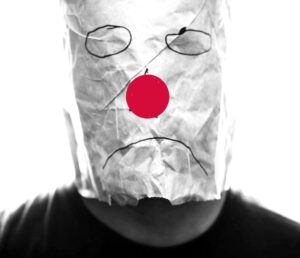
In this 21st century, truth is under attack. It is getting progressively harder and harder for us human beings to discern what is true from what is false. When we are no longer able to do so, our ability to live in relation to reality will have been sacrificed. Lies, pretense, and fabrication have become normalized. Machines are pretending to be human in ways that discourage human creativity. One of the most important human experiences that is most threatened by this advancing deception is “love.” The simple emotion of love requires a willingness to be vulnerable in relation to the truth. Honesty, as the human act of delivering the truth, is a necessity for true love to exist. In other words, if you are not honest, love cannot and will not form or be sustained in your love life.
Our creative ability as a species is without a doubt the most profound on this planet. In comparison to other living things, we creatively transform ourselves and our environments like no other. Ultimately, we are not bound by Mother Nature to remain within her healthy confines as we create in our lives. What is “man-made” is not always healthy for us. This includes how we create and recreate our mental and emotional lives. For example, mental health requires the creation of healthy interpersonal relationships. The evidence for this simple truth is overwhelming and indisputable. Dishonesty as an unhealthy creation, without question, damages interpersonal relationships and the outcome is what is commonly called a “toxic relationship.” An unfortunately common form of this relational toxicity is deceptive cheating in a love relationship when a commitment has been promised.
Dishonesty as a relationship experience is often taught. Children and adolescents can be taught dishonesty by the examples of older people in a family or in the ways they are related to. The problem is, these lessons about dishonesty are usually learned without consciousness, and they are taught by people who we love and need love from. Once learned as a way to relate in love, dishonesty tends to be repeated in most if not all subsequent love relationships.
The only hope we humans have of disrupting this recurrent unhealthy way of relating in love is to become conscious of its damaging effects on our love lives. At the same time, calling attention to the fact that the people who taught us, usually by example, were wrong in doing so. This acknowledgement coupled with a desire for something healthier in our own love lives, strengthens the motivation to change. This is difficult, given the familial context in which the learning took place, but not impossible. Once we are able to see our habitual commitment to dishonesty clearly, as an unhealthy experience in control of our love lives, the possibility of something new happening increases.
Consciousness as the exceptional human asset it truly is, allows us to apply functions like imagination, choice, memory, and conscious forms of learning for the purpose of re-directing our love lives toward something healthier. I believe our imaginations have a very special place in this regard. Once awareness and the capacity to challenge ourselves are practiced, the final step in this unlearning process is to learn something new and better. If you’ve led a life of dishonest relations, taught in childhood by dishonest family experience, adulthood is the time to practice living honestly for the purpose of a better love life.
The best way to begin doing this is to practice imagining the experiences that are opposite the ones that you were exposed to in childhood and adolescence. In relation to dishonesty, what does honesty look like? What does honesty feel like? What does a person do when they are in an honest love relationship? If you were exposed to dishonesty growing up, the therapy for your particular love life difficulties is to begin imagining an experience of honesty as the correction. Healthy conscious learning in our love lives begins with the identification of what we’ve learned that’s unhealthy, challenging its outcome in our lives, and correcting what we’ve learned first in our imaginations. Once learned there, the corrected conscious learning translates more easily into a healthier love relationship.
Comments? Let me know what you think…
Dr. Thomas Jordan, clinical psychologist, psychoanalyst, psychological disability consultant, speaker, and author of the award-winning book, Learn to Love: Guide to Healing Your Disappointing Love Life. Love Life Seminars and telehealth Love Life Consultations available upon request. Contact: 212-875-0154 or drtomjordan@lovelifelearningcenter.com for inquiries.